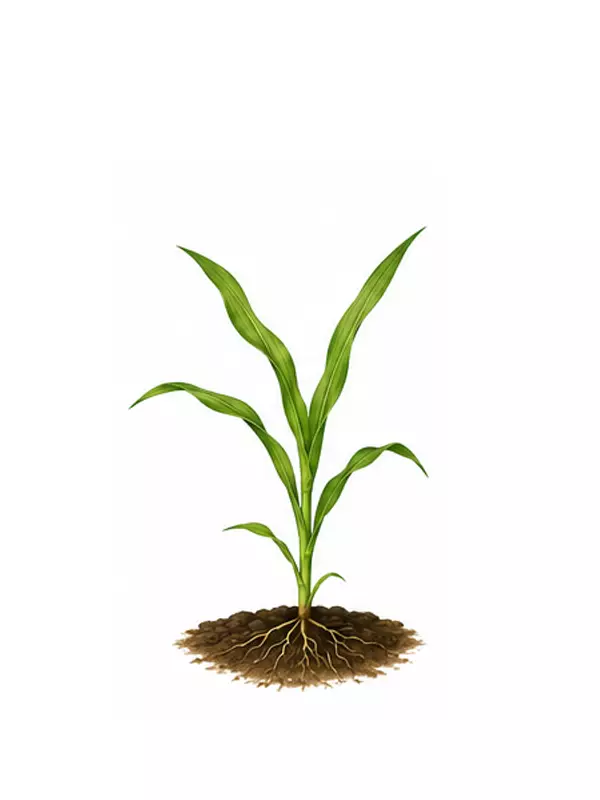
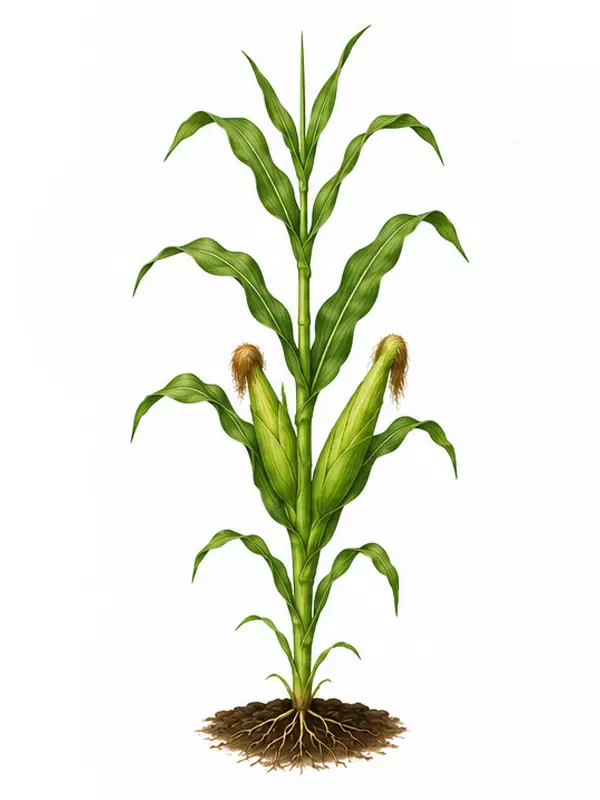
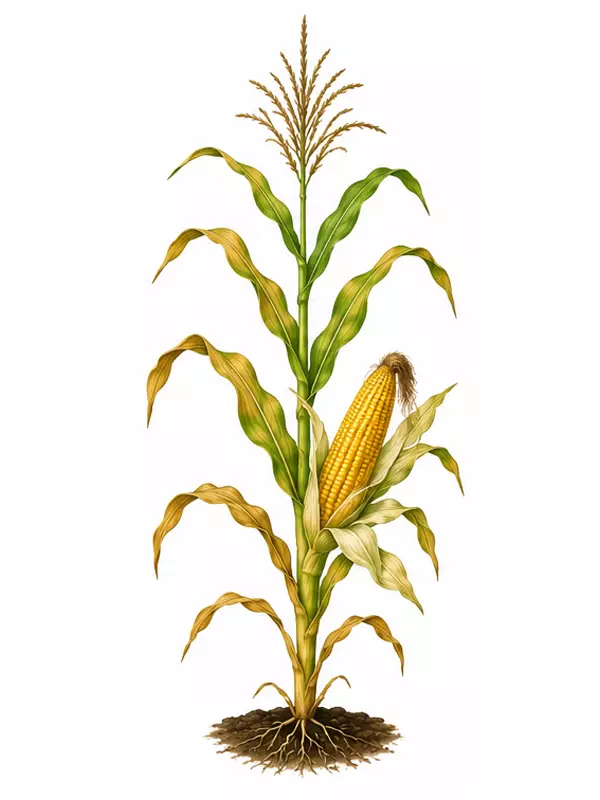
Proper nutrition management plays an important role in crop establishment, root development, ear formation, grain filling and final yield. Balanced nutrition throughout key growth stages can improve grain yield in grain maize and support biomass production and forage quality in silage maize.
Common Challenges
Zinc Deficiency
May reduce early growth, plant vigor and yield potential.
Phosphorus Deficiency
Can limit crop establishment and root development.
Nitrogen Imbalance
May reduce nutrient use efficiency and lead to uneven crop growth.
Potassium Deficiency
Can restrict nutrient uptake and reduce crop performance.
Key Growth Stages
These recommendations are intended as general guidance. Soil conditions, irrigation water quality, climate, hybrid selection and management practices may influence nutritional requirements.
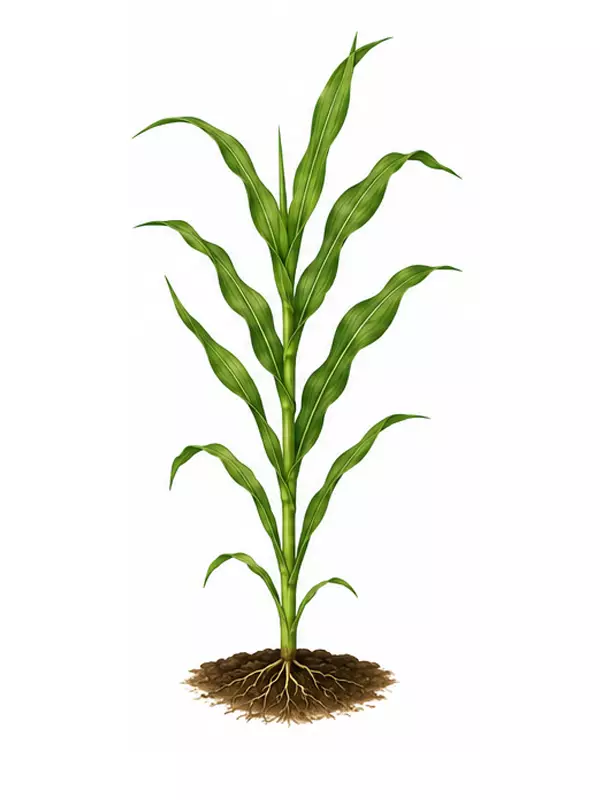
Early Establishment (V4–V6)
Why It Matters
This stage establishes the foundation for final yield. Strong root development and uniform early growth improve the plant’s ability to utilize water and nutrients efficiently.
Key Practices
Provide available phosphorus
Supply zinc
Support root development
Correct early-season nutrient deficiencies
In silage maize, greater emphasis is placed on rapid vegetative growth and biomass production.
Recommended Products
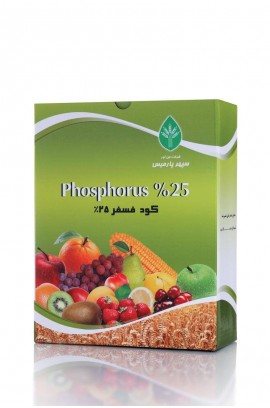
Phosphorus Complex 25%
980,000IRT
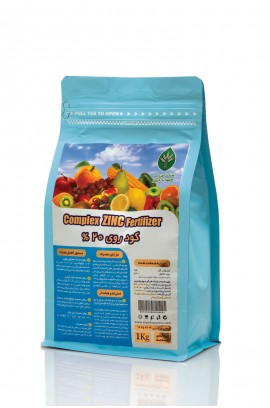
Zinc Complex 20%
850,000IRT
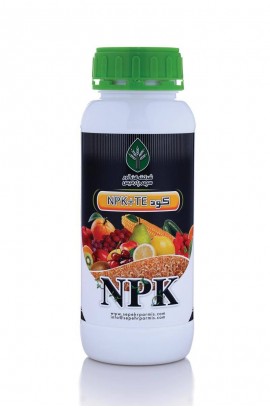
NPK+TE
530,000IRT
Vegetative Growth & Stem Elongation
Why It Matters
A large portion of the crop’s photosynthetic capacity develops during this stage. Nutrient deficiencies can directly affect final yield and biomass production.
This stage is particularly important for maximizing forage yield and dry matter production in silage maize.
Key Practices
Supply nitrogen
Correct zinc and micronutrient deficiencies
Maintain uniform crop growth
Support healthy leaf development
Recommended Products
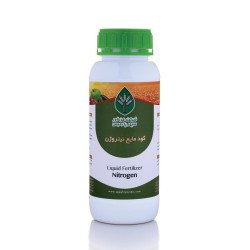
Liquid Nitrogen
470,000IRT
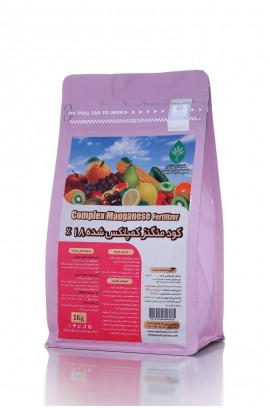
Manganese Complex 18%
800,000IRT
Zinc Complex 20%
850,000IRT
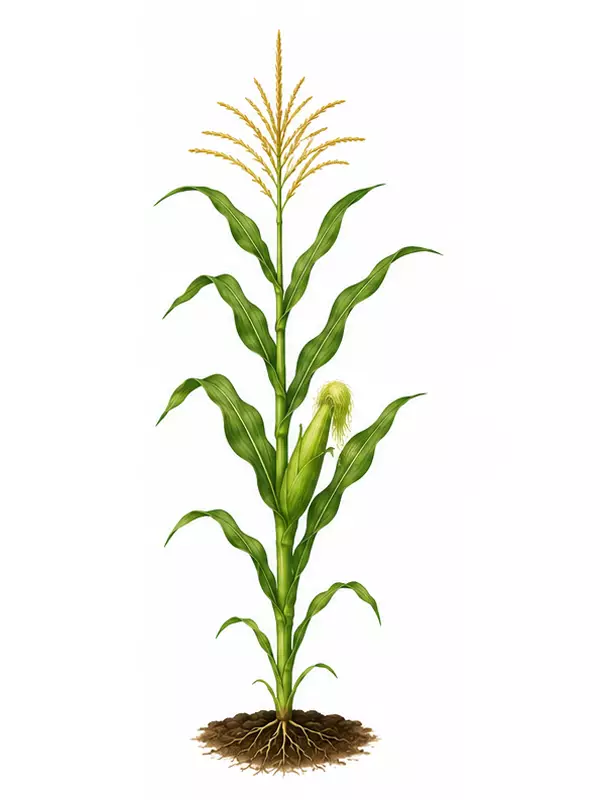
Tasseling & Pollination
Why It Matters
Nutritional stress during this stage may reduce pollination success and decrease kernel number per ear.
Although less critical in silage maize than grain maize, maintaining crop health remains important.
Key Practices
Maintain balanced nutrition
Supply potassium
Provide essential micronutrients
Reduce environmental stress
Recommended Products
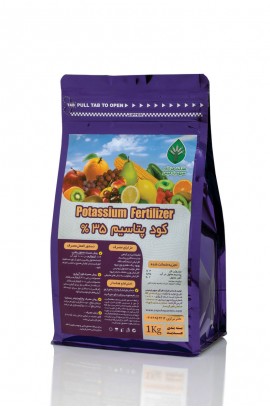
Potassium Complex 35%
770,000IRT
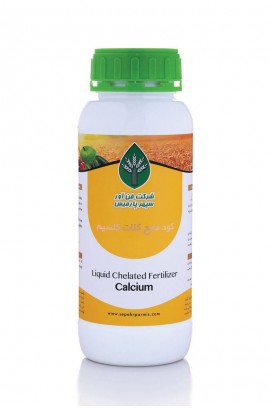
Calcium Complex
560,000IRT
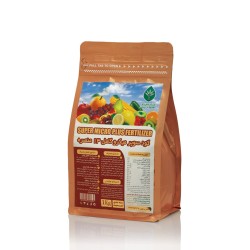
Super Micro 13 Powder Formula
870,000IRT
Ear Development & Early Grain Fill
Why It Matters
A significant portion of yield potential is determined during this stage and nutrient demand increases substantially.
Key Practices
Supply potassium
Maintain healthy foliage
Provide essential micronutrients
Reduce environmental stress
Recommended Products
Potassium Complex 35%
770,000IRT
Calcium Complex
560,000IRT
Iron Zinc Manganese
560,000IRT
Grain Filling or Maximum Dry Matter Production
Why It Matters
In grain maize, this stage directly influences grain weight and final yield. In silage maize, forage quality and dry matter accumulation are strongly affected.